Why tempering works
Cocoa butter can set in several different crystal forms. Only one of them, often called form V, gives the gloss, snap and slow melt of a good bar. If you melt chocolate and let it cool on its own, it sets in a mix of forms and turns dull, soft and streaky.
Tempering fixes that. You melt the chocolate hot enough to erase all the crystals, then cool it while stirring in a way that encourages only the good ones to form. Once enough of them are there, they act as a template and the rest of the chocolate follows.
What you need
- A good instant-read or probe thermometer. Infrared thermometers read only the surface, so stir well before you trust one.
- A heatproof bowl and a pan for a water bath, or a microwave.
- A silicone spatula, and parchment or a knife blade for testing.
- Good chocolate in bar or wafer form, chopped evenly. Chips are a poor choice here.
Target temperatures
| Chocolate | Melt to (°F) | Melt to (°C) | Work at (°F) | Work at (°C) |
|---|---|---|---|---|
| Dark | 115 to 120 | 46 to 49 | 88 to 90 | 31 to 32 |
| Milk | 110 to 115 | 43 to 46 | 86 to 88 | 30 to 31 |
| White | 105 to 110 | 40 to 43 | 82 to 84 | 28 to 29 |
These are rounded, commonly used figures. Chocolates vary, and many makers print a tempering curve on the package or their website. When they do, use theirs.
The seed method, step by step
- Weigh your chocolate. Set aside about a quarter of it, finely chopped, as the seed. This part must come from a well-tempered bar, so use one that is shiny and snaps.
- Melt the rest gently over barely simmering water, with the bowl not touching the water, or in the microwave at half power in 20 to 30 second bursts. Stir often.
- Bring it up to the melt temperature for its type and stir until fully smooth.
- Take it off the heat and add the seed chocolate a handful at a time, stirring steadily. The seed cools the batch and brings in good crystals.
- Keep stirring until the chocolate reaches its working temperature. If unmelted pieces of seed remain, lift them out.
- Test it, then work quickly. Keep the bowl in the working range with brief, gentle warming if it starts to thicken.
How to test the temper
Dip the tip of a knife or a strip of parchment into the chocolate and set it down in a cool room, around 65 to 70°F (18 to 21°C). Well-tempered chocolate sets within about five minutes with an even shine and no streaks. If it stays tacky, or sets with gray swirls, it is not in temper yet.
When it goes wrong
| What you see | Likely cause | What to do |
|---|---|---|
| Test stays soft or sticky | Not enough good crystals | Stir longer, or add more seed and cool a little more |
| Gray streaks after setting | Too warm when used, or never fully melted | Start over: melt fully, then temper again |
| Chocolate turns thick and pasty | Too cool, or over-crystallized | Warm gently by a degree or two and stir |
| Grainy and stiff after a drop of water | Seized | It cannot be tempered now. Use it in a sauce or batter instead. |
A failed temper is not wasted. You can melt the same chocolate again and start over, or use it in a baking recipe where tempering does not matter.
Other methods
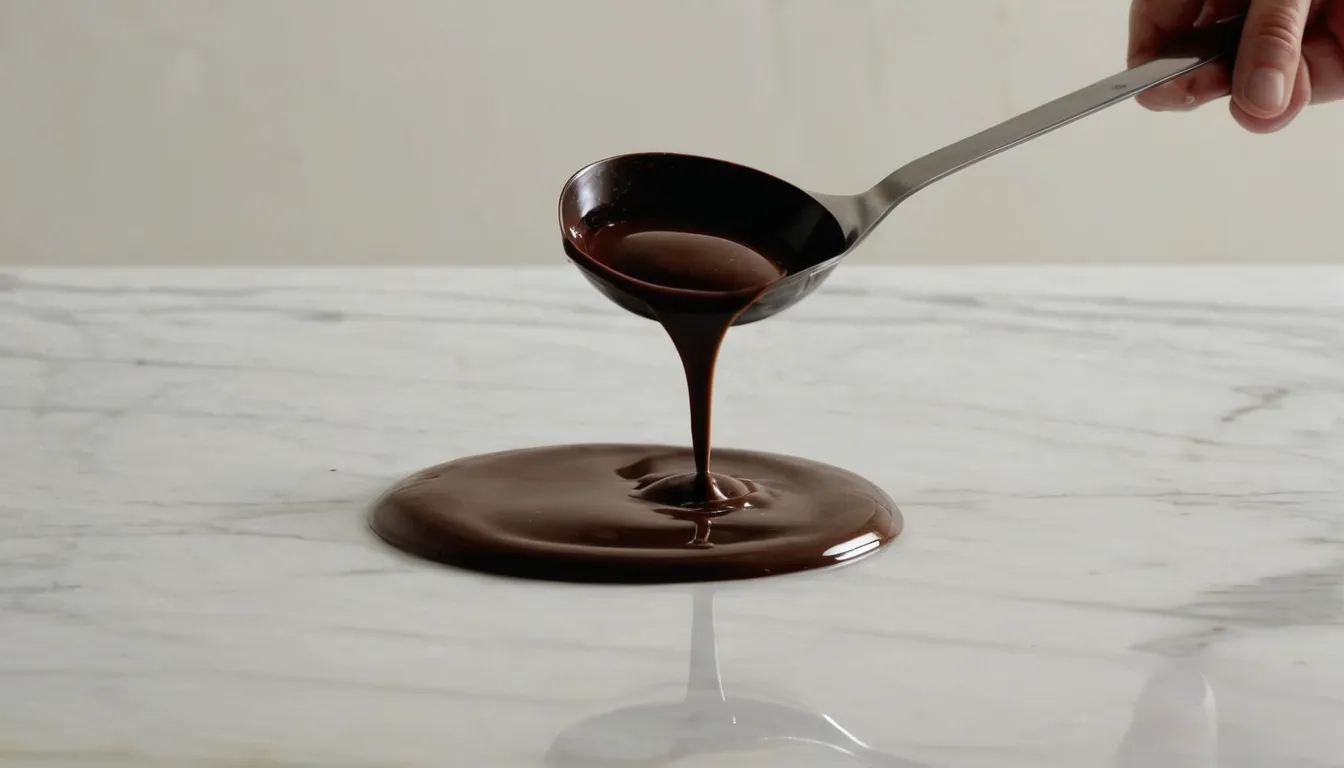
Tabling is the classic pastry method. You pour part of the melted chocolate onto a marble slab and work it with a scraper until it thickens, then return it to the bowl. It is fast in skilled hands but messy at first. Some cooks also use cocoa butter powder as a seed, following the maker's instructions. For small batches at home, the seed method is the easiest place to start.
Hot chocolate and hot sugar can burn. Keep water away from the bowl, wipe the bottom of the bowl dry after a water bath, and keep children back from the stove.