The best spot
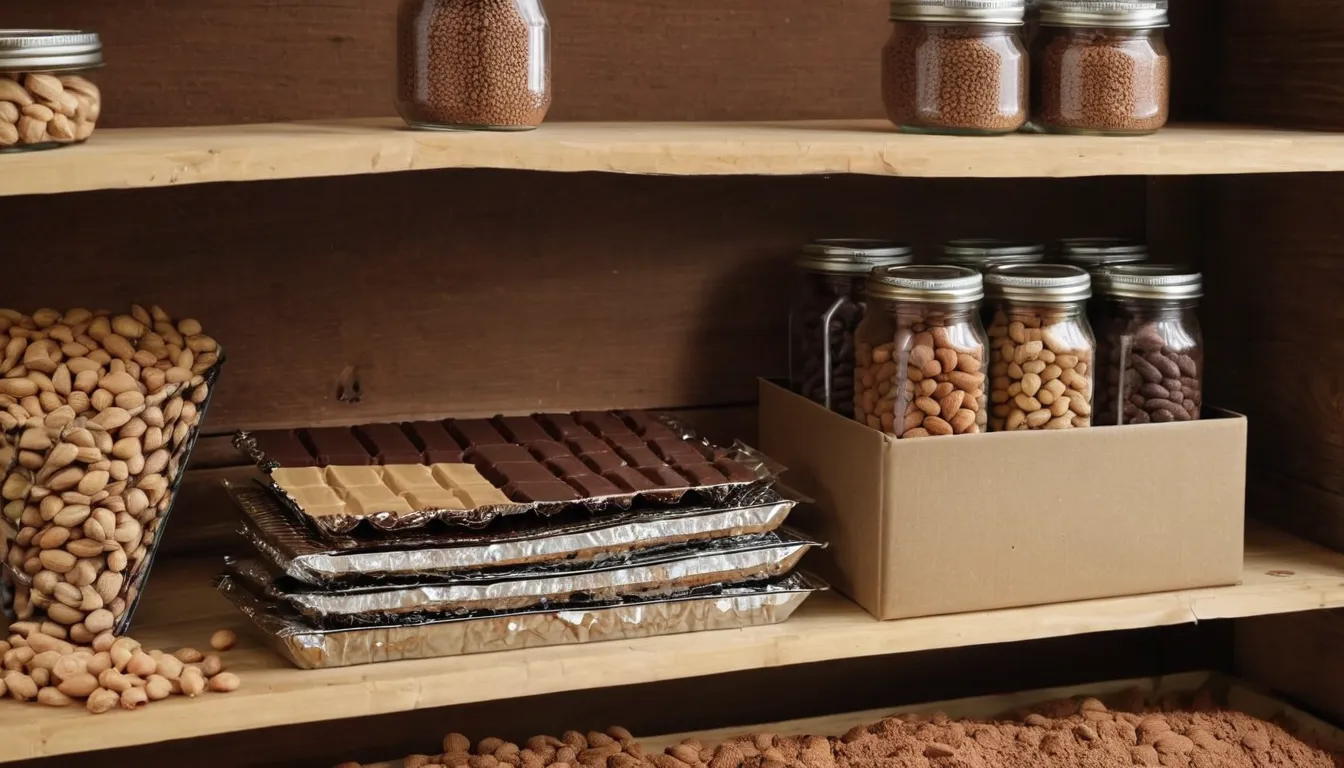
Aim for a cool, steady room temperature, around 60 to 68°F (16 to 20°C), with low humidity. A pantry or a cupboard away from the stove, the dishwasher and sunny windows usually works. Keep chocolate in its wrapper and then in an airtight container, since cocoa butter picks up smells from coffee, spices, onions and cleaning products.
- Cool and steady is better than cold. Big swings in temperature cause bloom.
- Dark is better than bright. Light can make chocolate taste stale faster.
- Dry is better than humid. Moisture causes sugar bloom.
Fat bloom and sugar bloom
Bloom is the gray or white film that appears on older chocolate. There are two kinds, and both are safe to eat.
| Type | Looks like | Cause |
|---|---|---|
| Fat bloom | Gray streaks or a soft, greasy-looking haze. Wipes off slightly and melts when touched. | Warmth, temperature swings, or chocolate that was not well tempered. Cocoa butter moves to the surface and sets there. |
| Sugar bloom | A dry, dusty white coating that feels gritty and does not melt under a fingertip. | Moisture, often condensation after the fridge. Water dissolves sugar on the surface, and it dries as crystals. |
Bloomed chocolate may taste a little flat and feel less smooth, but it works fine in baking. Melting it erases the bloom. If you temper it again, the shine comes back.
The fridge and freezer
In a hot kitchen or a warm climate, the fridge may be the only cool place. It works if you protect the chocolate from moisture and smells:
- Wrap the chocolate tightly in its foil or in plastic wrap.
- Put it in an airtight container or zip-top bag and press out the air.
- When you take it out, leave it sealed until it reaches room temperature. That stops condensation forming on the cold surface, which causes sugar bloom.
The freezer works the same way for longer storage. Move it to the fridge first, then to the counter, still sealed, to warm it gradually.
How long it keeps
Plain dark chocolate keeps well for a long time when stored properly, often a year or more, because it has little moisture and no milk. Milk and white chocolate have a shorter life because their milk fats can go stale. Chocolates with nuts, fillings or fruit keep for less time still. Go by the best-by date on the package as a guide. Past that date, the chocolate is usually still safe but may have lost flavor. If it smells rancid, sour or of the cupboard, throw it out.
Storing homemade treats
- Untempered chocolate treats, such as most homemade peanut butter cups, belong in the fridge in a sealed container.
- Ganache made with cream should be refrigerated and used within a few days. Follow the food safety advice for dairy.
- Dipped fresh fruit is best eaten the same day.
- Bark made with tempered chocolate keeps at cool room temperature for a week or two in a sealed tin.
Keep peanut and nut treats in clearly labeled containers if anyone in the house has a food allergy, and store them apart from other sweets.
Keep it away from pets
Chocolate is toxic to dogs and cats, and darker chocolate is more dangerous. Store it where pets cannot reach it, including bags and coat pockets. If a pet eats chocolate, call your veterinarian or an animal poison control line right away.